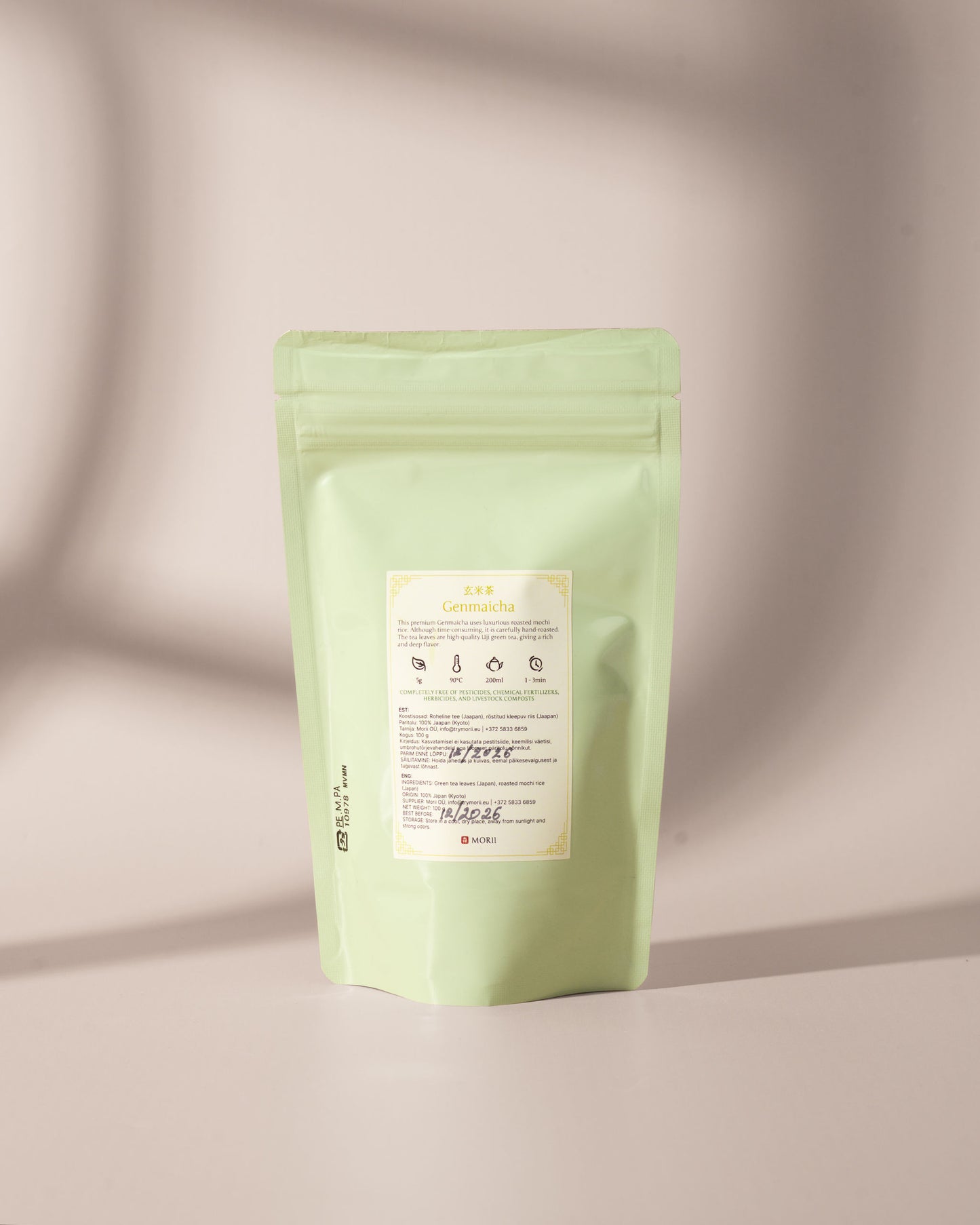
Genmaicha is green tea blended with roasted brown rice, and this one is unusual because the rice is the farm's own. Morii Farm grows the rice in its own paddies and roasts it by hand in small batches, then blends it with spring green tea from the same fields. The cup is toasty and comforting, like warm rice and popcorn over a light green tea, and low enough in caffeine for the evening.
Farm-grown rice, roasted by hand
Most genmaicha is made from bought-in roasted rice mixed with lower-grade leaf. Here the farm takes responsibility for every grain: the rice is grown on the estate with reduced pesticide use, dried, and roasted in a pan by hand until it is golden and fragrant. Hand roasting is slow, but it lets the farmer stop at exactly the right colour, so the rice tastes nutty rather than burnt.
The tea in it
The green tea is the farm's own spring leaf, grown without pesticides, chemical fertilizers, herbicides or animal manure. Because half the weight of the blend is rice, a cup of genmaicha has less caffeine than the same weight of sencha.
Taste
Roasted rice and popcorn first, then a soft, savoury green tea underneath and a clean, slightly sweet finish. It pairs with almost any food and is very forgiving to brew.
How to brew
Hot: 3 g per 200 ml at 80–90 °C for 30–60 seconds; re-steep twice. Hotter water brings out the roasted character, cooler water the green tea. Cold brew: 5 g per litre, 6–8 hours in the fridge, for a clear golden tea with a champagne-like sweetness from the rice.
Good to know
50 g is about 16 pots. A 200 ml cup contains roughly 10–20 mg of caffeine, a fraction of a coffee. Store airtight and dry; roasted rice absorbs moisture and smells quickly.
From Morii Farm, Kizugawa, Kyoto
Every tea in our online shop comes from one farm. Morii Farm is a small family farm in Kizugawa, in the hills of southern Kyoto Prefecture next to the Kizu River, run by Masakazu and Tomomi Morii, the fourth generation on this land. The slopes are steep and the gap between day and night temperatures is wide, which slows the leaves down and concentrates their sweetness. Since 2017 the fields have been managed without pesticides, chemical fertilizers, herbicides or animal manure; the only fertilizer is natural rapeseed cake. This is the farm's own practice, not a certification, and it is the reason our teahouse in Tallinn carries the family name.
Frequently asked questions
What is genmaicha?
Genmaicha is Japanese green tea blended with roasted brown rice. It began as a way to stretch tea; today it is loved for its toasty, nutty flavour. Some grains pop during roasting, which is why it is sometimes called popcorn tea.
Does genmaicha have caffeine?
A little. Roughly 10–20 mg per 200 ml cup, because half the blend is rice and the leaf is brewed briefly. Filter coffee has about 90 mg.
Can I drink genmaicha in the evening?
Most people can. It has less caffeine than sencha and far less than matcha, and the roasted rice makes it feel warming rather than stimulating.
Where does the rice come from?
From Morii Farm's own paddies in Kizugawa, Kyoto. It is grown with reduced pesticide use, and roasted by hand on the farm. The tea leaves are grown without pesticides, chemical fertilizers, herbicides or animal manure.
Genmaicha vs hojicha: which should I choose?
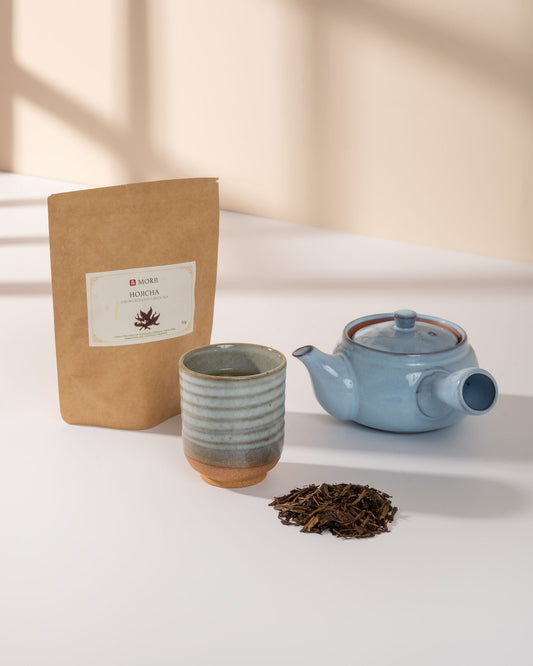
Both are toasty and low in caffeine. Genmaicha is green tea with roasted rice, so it is lighter and more savoury. Hojicha is roasted tea leaf, so it is darker, sweeter and tastes of caramel. If you like coffee, start with hojicha; if you like rice and miso, start with genmaicha.
Can genmaicha be cold-brewed?
Yes, and it is one of the farm's favourite ways to serve it: 5 g per litre, 6–8 hours in the fridge.
Is genmaicha gluten-free?
Rice is naturally gluten-free and nothing else is added: tea leaf and roasted rice only.
How fast does it ship, and what does delivery cost?
Orders ship within 24 hours from Tallinn, Estonia. Estonia: Omniva parcel locker €2.95, free from €50. Latvia and Lithuania: €4.95–5.95. Finland: Matkahuolto €7.95. Elsewhere in the EU: free shipping from €75. Pickup at Morii Teahouse, Kopli 16, Tallinn (Mon–Sat 12–21, Sun 12–20) is usually ready the same day, and you can taste the tea before you take it home.