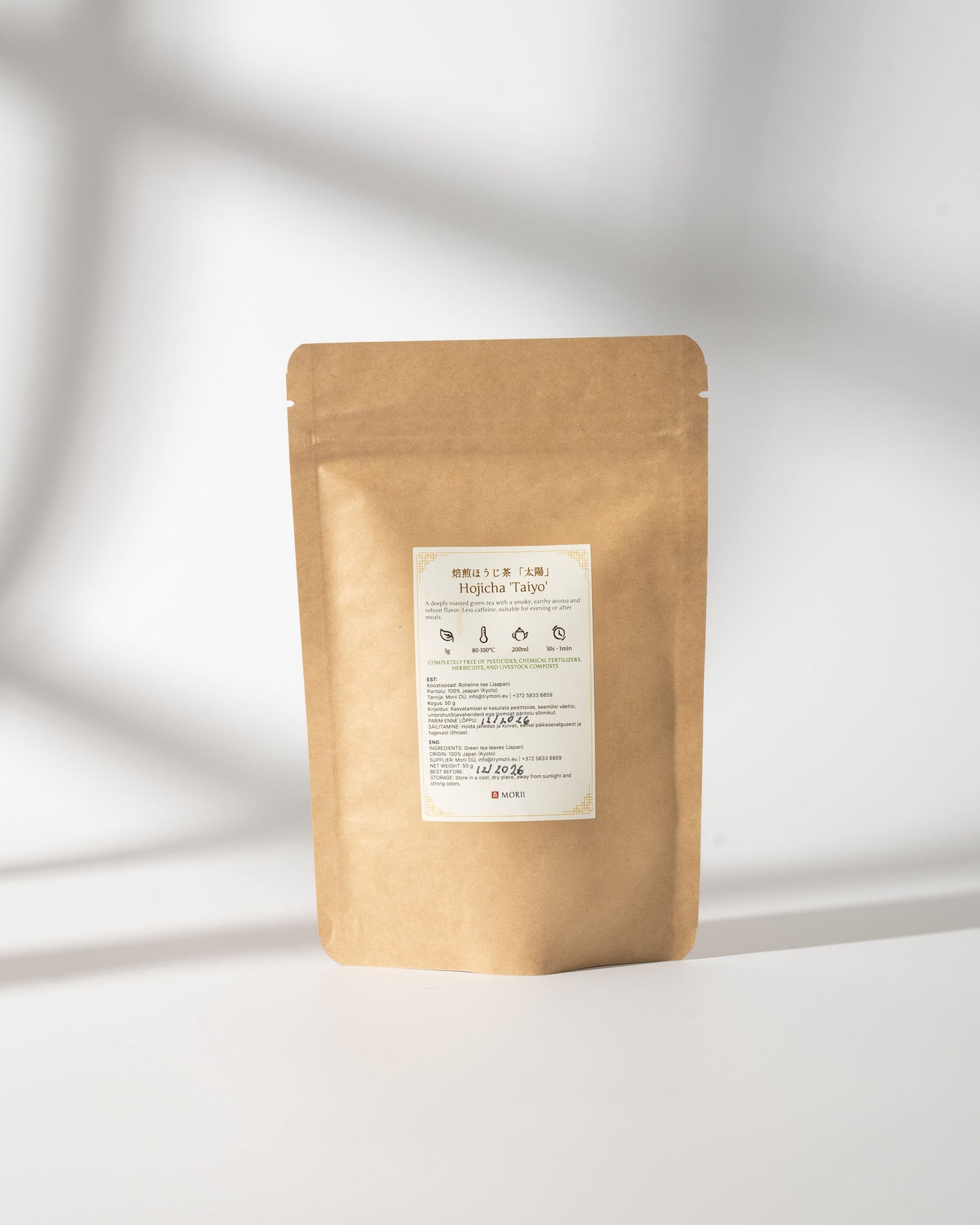
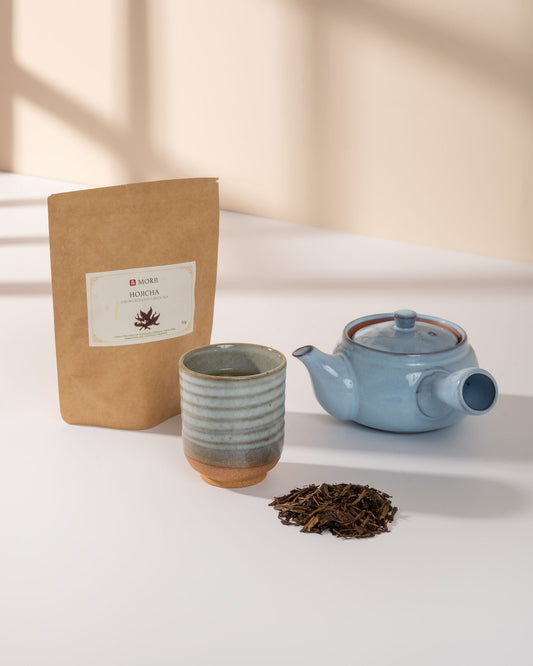
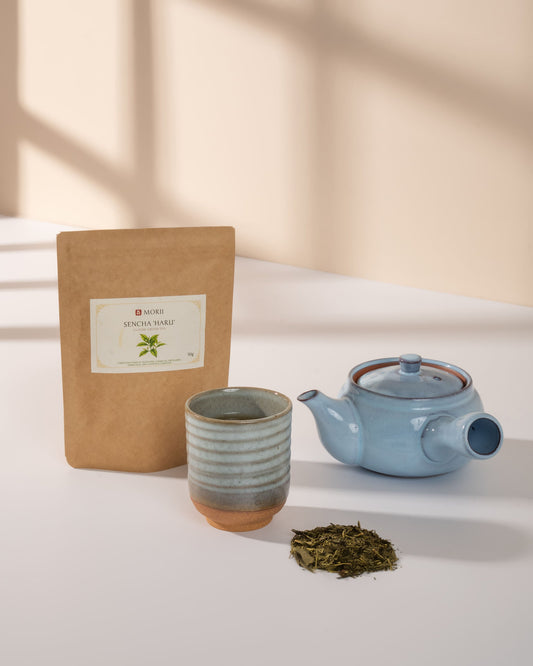
Hojicha is Japanese green tea roasted until it turns amber, and this is the farm's deep roast: warm, sweet and smoky-caramel, with almost no bitterness and very little caffeine. Most hojicha is made from cheap late-season leaf. Morii Farm roasts its first-flush spring leaf instead, which is why this cup is smooth rather than ashy. It is the tea for after dinner, for children and for anyone cutting down on coffee.
First-flush leaf, deep roast
Hojicha is usually a way to use up coarse summer and autumn leaf. The farm does the opposite: it roasts spring-picked Yabukita, the same leaf grade that goes into its sencha. Spring leaf is soft and sweet, so even a strong roast stays round and clean. Roasting also breaks down much of the caffeine and the catechins, which is why hojicha is so gentle on the stomach.
Taste
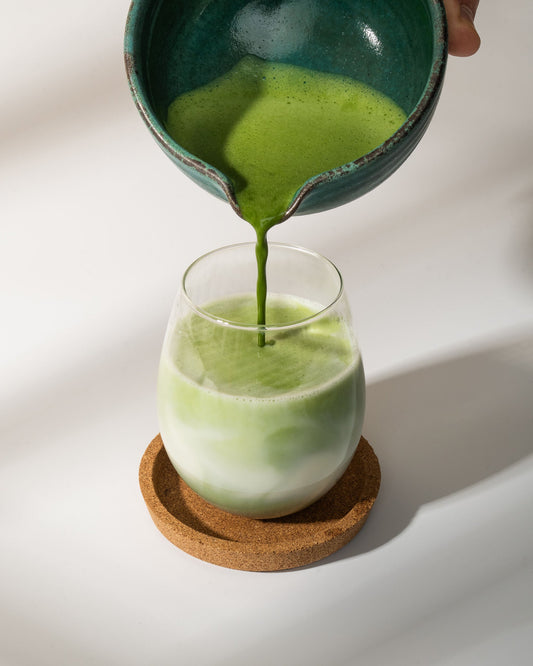
Toasted grain, caramel, cocoa and a little woodsmoke, with a naturally sweet, soft finish. The liquor is clear amber. It takes milk well and is the base of a proper hojicha latte.
How to brew
Hot: 3 g per 200 ml with water just off the boil (90–100 °C), 30–60 seconds. Re-steep twice. Latte with leaves: steep 6 g in 100 ml of boiling water for 3 minutes, strain, add 200 ml of hot milk and a little honey. Cold brew: 5 g per litre, 6–8 hours in the fridge, for an iced tea that tastes like cold caramel.
Good to know
50 g is about 16 pots. A 200 ml cup contains roughly 10–20 mg of caffeine, a fraction of a coffee. Store airtight; roasted tea keeps longer than green tea, up to six months after opening.
From Morii Farm, Kizugawa, Kyoto
Every tea in our online shop comes from one farm. Morii Farm is a small family farm in Kizugawa, in the hills of southern Kyoto Prefecture next to the Kizu River, run by Masakazu and Tomomi Morii, the fourth generation on this land. The slopes are steep and the gap between day and night temperatures is wide, which slows the leaves down and concentrates their sweetness. Since 2017 the fields have been managed without pesticides, chemical fertilizers, herbicides or animal manure; the only fertilizer is natural rapeseed cake. This is the farm's own practice, not a certification, and it is the reason our teahouse in Tallinn carries the family name.
Frequently asked questions
What is hojicha?
Hojicha is Japanese green tea roasted at high temperature until the leaves turn brown. Roasting removes the grassy notes and most of the bitterness, and gives a toasty, caramel flavour and a reddish-amber cup. The full story, with taste, caffeine and brewing, is in our Teapedia article what is hojicha.
Does hojicha have caffeine?
Very little: roughly 10–20 mg per 200 ml cup, compared with around 90 mg in filter coffee and 60–70 mg in a bowl of matcha. It is one of the lowest-caffeine real teas.
Can I drink hojicha before bed?
Many people in Japan do. The caffeine is low and the roast makes it feel warming rather than stimulating. If you are very sensitive, brew it for 30 seconds instead of a minute.
Hojicha vs matcha: what is the difference?
Matcha is shaded green leaf ground to a powder, bright green, high in caffeine and theanine. Hojicha is roasted leaf, brown, low in caffeine and tastes of caramel. They sit at opposite ends of Japanese tea.
What does hojicha taste like?
Toasted grain, caramel, a hint of cocoa and smoke, naturally sweet, no astringency. People who do not like green tea usually like hojicha.
Is this the strong or the light roast?
This is the strong roast (Taiyo). We also sell a light, hand-roasted hojicha (Kohaku) that keeps more green-tea character. Strong is for lattes and coffee drinkers; light is for green-tea drinkers.
Can I make a hojicha latte with loose leaves?
Yes: steep 6 g in 100 ml of boiling water for 3 minutes, strain into 200 ml of hot milk. For a quicker latte, our hojicha powder dissolves straight into milk.
Is hojicha good for children?
The farm recommends it for families: low caffeine, no bitterness and a naturally sweet taste. Serve it lukewarm or cold-brewed.
How fast does it ship, and what does delivery cost?
Orders ship within 24 hours from Tallinn, Estonia. Estonia: Omniva parcel locker €2.95, free from €50. Latvia and Lithuania: €4.95–5.95. Finland: Matkahuolto €7.95. Elsewhere in the EU: free shipping from €75. Pickup at Morii Teahouse, Kopli 16, Tallinn (Mon–Sat 12–21, Sun 12–20) is usually ready the same day, and you can taste the tea before you take it home.