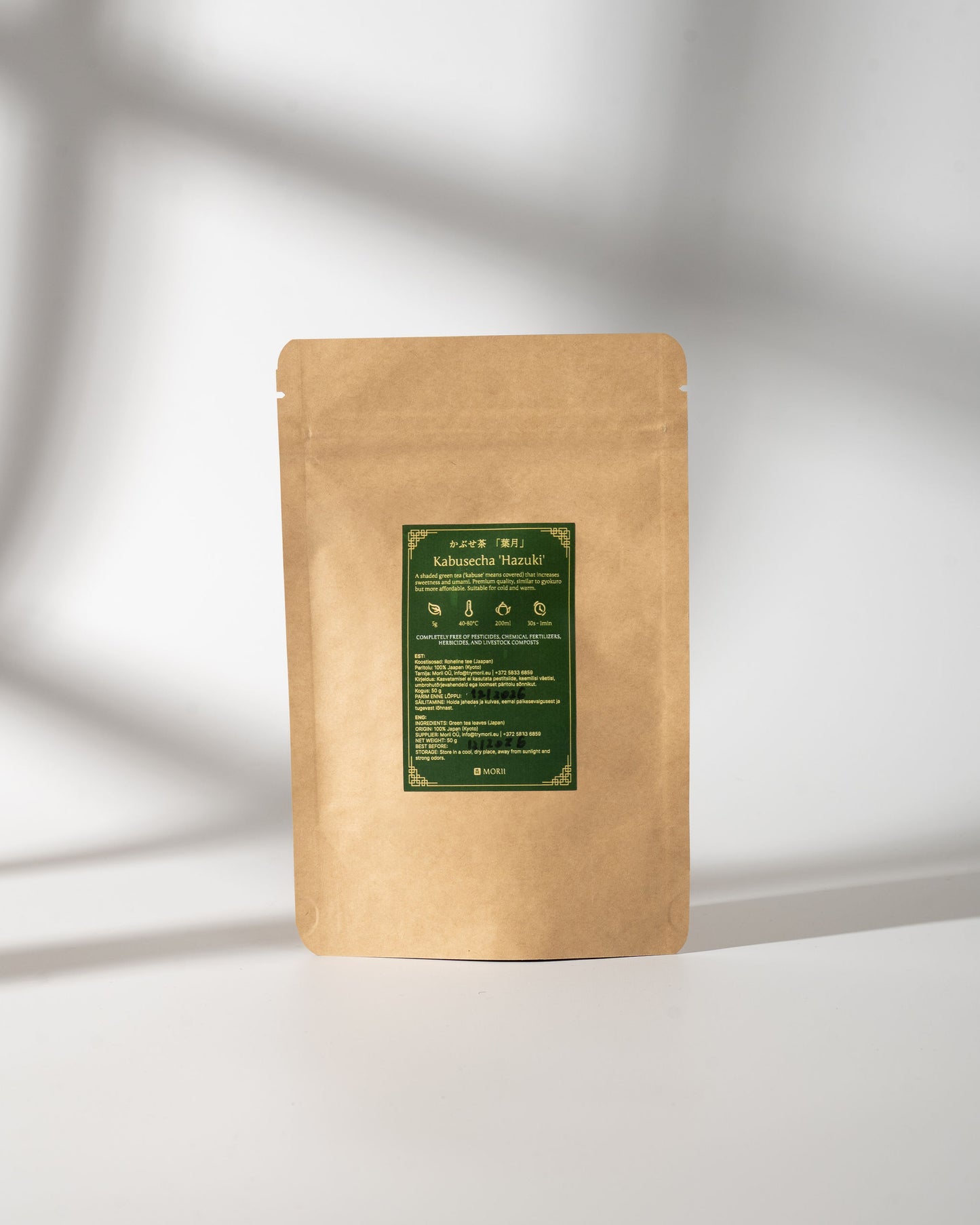
Kabusecha is sencha's shaded sibling: the same spring leaf, covered for two weeks before harvest so it keeps more theanine and less astringency. Morii Farm's kabusecha is deep-steamed, which makes the cup smooth and almost creamy, with a sweetness close to gyokuro at everyday-tea prices. It is the tea we reach for when we want the depth of matcha in a teapot.
Why shading matters
In full sun a tea plant converts theanine, the amino acid behind umami, into catechins, which taste astringent. Covering the rows with cloth for the last two weeks slows that conversion, so the leaf stays sweet and turns a deeper green. Kabusecha sits between sencha (unshaded) and gyokuro (shaded three weeks or more); only a few percent of Japan's tea is grown this way, because the netting is laid and lifted by hand.
Deep-steamed in Kyoto
After picking, the leaves are steamed longer than usual (fukamushi). The leaf breaks up more, the liquor turns cloudy green and the taste becomes rounder and fuller. It also means the tea brews quickly and forgives a little carelessness.
Taste
Sweet, savoury and brothy, with a soft vegetal note and a long, clean finish. Low bitterness even at the second infusion. Cold-brewed it tastes like sweet green juice.
How to brew
Hot: 3 g (one heaped teaspoon) per 200 ml. Water at 60–70 °C, steep 60–90 seconds. Second infusion 30 seconds at the same temperature, third a little hotter; with more leaf and shorter pours the leaves go to five infusions. Cooler water gives more sweetness; hotter water gives a brighter, grassier cup. Cold brew: 5 g per litre of cold water, 6–10 hours in the fridge. Water: filtered or soft water shows the umami best; if your tap water is hard, use slightly less leaf.
Good to know
Cultivar Yabukita, spring first flush, 50 g loose leaf: about 16 pots, which is 50–80 cups counting re-steeps, so the price per cup is far below a tea bag. A 200 ml cup contains roughly 30–40 mg of caffeine, under half a cup of coffee. Store airtight, away from light, and use within three months of opening.
From Morii Farm, Kizugawa, Kyoto
Every tea in our online shop comes from one farm. Morii Farm is a small family farm in Kizugawa, in the hills of southern Kyoto Prefecture next to the Kizu River, run by Masakazu and Tomomi Morii, the fourth generation on this land. The slopes are steep and the gap between day and night temperatures is wide, which slows the leaves down and concentrates their sweetness. Since 2017 the fields have been managed without pesticides, chemical fertilizers, herbicides or animal manure; the only fertilizer is natural rapeseed cake. This is the farm's own practice, not a certification, and it is the reason our teahouse in Tallinn carries the family name.
Frequently asked questions
What is kabusecha?
Kabusecha (“covered tea”) is Japanese green tea shaded for one to two weeks before harvest. Shading raises theanine and lowers astringency, so the cup is sweeter and more savoury than regular sencha.
Kabusecha vs sencha vs gyokuro: what is the difference?
Sencha grows in full sun. Kabusecha is shaded for about two weeks. Gyokuro is shaded for three weeks or longer and picked by hand, which is why it costs several times more. Kabusecha gives most of gyokuro's sweetness with sencha's freshness and price.
How much caffeine does kabusecha have?
Roughly 30–40 mg per 200 ml cup, less than half a cup of filter coffee (about 90 mg). Shading slightly raises caffeine compared with sencha, but the theanine makes the effect calmer.
What temperature should I brew kabusecha at?
60–70 °C. Let boiled water stand for 4–5 minutes, or pour it through an empty cup first. Above 80 °C the tea turns bitter and you lose the sweetness you paid for.
How many times can I re-steep kabusecha?
At least three times with a normal teapot: 60–90 seconds, then 30 seconds, then about a minute with slightly hotter water. Brewed gongfu-style, with more leaf (5 g per 100 ml) and short 20–40 second pours, the same leaves give five or more infusions; we regularly get five at the teahouse. Leave the wet leaves in the pot or a closed strainer between steeps and finish them the same day. That is also why loose kabusecha is economical: 3 g makes three to five cups, so 50 g is 50–80 cups.
Is kabusecha good for cold brew?
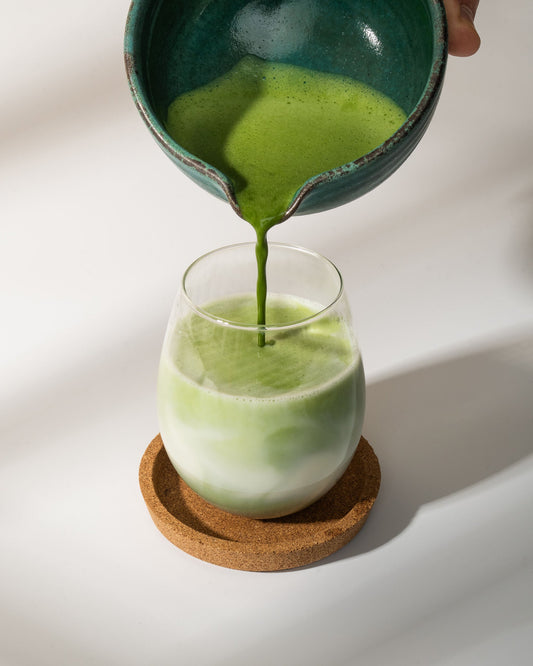
It is one of the best teas for it. 5 g per litre, 6–10 hours in the fridge; the result is sweet, bright green and almost free of bitterness.
Does kabusecha help with focus or relaxation?
Shaded teas contain more L-theanine, an amino acid that is studied for its calming effect and is the reason green tea feels different from coffee. We cannot make health claims; we can say it is the tea our team drinks while working.
How should I store it?
Airtight, cool and dark. Once opened, use within three months. Do not refrigerate loose leaf unless the pack is sealed; condensation is worse than warmth.
How fast does it ship, and what does delivery cost?
Orders ship within 24 hours from Tallinn, Estonia. Estonia: Omniva parcel locker €2.95, free from €50. Latvia and Lithuania: €4.95–5.95. Finland: Matkahuolto €7.95. Elsewhere in the EU: free shipping from €75. Pickup at Morii Teahouse, Kopli 16, Tallinn (Mon–Sat 12–21, Sun 12–20) is usually ready the same day, and you can taste the tea before you take it home.